










YANSAB
2290
2290
SABIC AGRI-NUTRIENTS
2020
2020
SIPCHEM
2310
2310
SAUDI KAYAN
2350
2350
TASNEE
2060
2060
Sahara
2260
2260
SABIC
2010
2010
ADVANCED
2330
2330
The ongoing changes in dynamics of petrochemical industry gave birth to several challenges for the sector, according to a report by AlJazira Capital.
On the global front, mainly after the development in US shale plays and alternative echniques/processes to produce petrochemicals. However, on the local front, the sector is encountering shortage of gas, which is mainly due to rise in demand of electricity to facilitate the growth in the kingdom’s economy.
Hence, this poses a serious threat to the profit margins of those local petrochemical complexes which are using gas as a feedstock. Because, end product prices are declining; while, the cost of feedstock is fixed. Moreover, the increase in production from US shale and other developments at trade routes; like, Panama Canal will also lead to increase competition in international market (particularly; Asian market; where, the shale plays are still uncertain). The collapse in benchmark crude oil prices was mainly associated with the efforts of influential GCC members of OPEC to sustain their market share; following the increase in production from OECD member and United States (USA). According to BP 2014 statistical review, production of crude oil (offshore & onshore oil, tight oil, sand oil and other NGLs) from OECD indicated YoY growth of 5.6% in 2013 as compared to a decline of 1.8% witnessed by OPEC member countries.
On a country basis, US and Canada witnessed YoY growth of 13.5% and 6.0%, respectively, in crude oil production; as compared to a decline of 1.1% and 1.3% in production from Saudi Arabia and Kuwait. According to US Energy Information Administration (EIA), 67.0% of the growth in US oil production (including NGLs) is associated with Bakken (in North Dakota) and Eagle Ford shale (South Texas) shale plays. This indicates the prominent role of shale plays in US oil market.
The rise in oil production in USA, the largest net oil importer1 , is an alarming signal for key oil exporters, across the globe.
The situation could worsen if crude oil production in USA will be equivalent to the refining capacity; because this will lead to a significant cut in imported oil and lead China to become the largest importer. However, the numbers are showing a slowdown in Chinese economy; and, hence, AlJazira Capital does not expect China to be a good substitute.
The prime reason of recent fall in benchmark oil prices are (i) increase in supply mainly from unconventional sources like USA shale, (ii) rising focus to develop alternative energy; other than crude oil and (iii) slowdown and reduce dependence on imported oil in major economies.
AlJazira Capital believes these factors are expected to assert pressure on prices of benchmark crude oil in short-near term. Therefore, the average prices of benchmark crude oil for 2015 and 2016 are expected at USD65.0/bbl and USD70.0/bbl, respectively. However, AlJazira’s long-term price range for the benchmark crude oil is USD75/bbl – USD80/bbl2 .
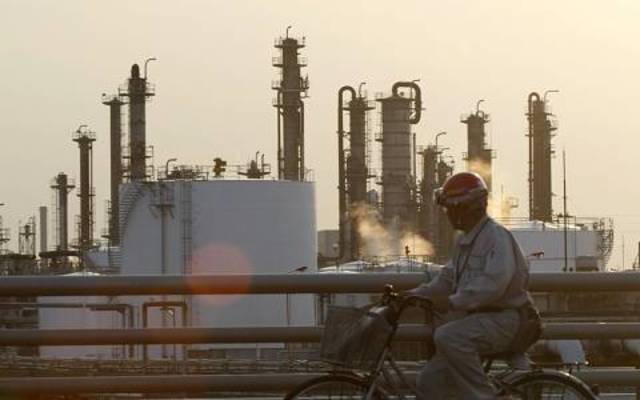
Photo Credit: Arabianeye-Reuters
On the global front, mainly after the development in US shale plays and alternative echniques/processes to produce petrochemicals. However, on the local front, the sector is encountering shortage of gas, which is mainly due to rise in demand of electricity to facilitate the growth in the kingdom’s economy.
Hence, this poses a serious threat to the profit margins of those local petrochemical complexes which are using gas as a feedstock. Because, end product prices are declining; while, the cost of feedstock is fixed. Moreover, the increase in production from US shale and other developments at trade routes; like, Panama Canal will also lead to increase competition in international market (particularly; Asian market; where, the shale plays are still uncertain). The collapse in benchmark crude oil prices was mainly associated with the efforts of influential GCC members of OPEC to sustain their market share; following the increase in production from OECD member and United States (USA). According to BP 2014 statistical review, production of crude oil (offshore & onshore oil, tight oil, sand oil and other NGLs) from OECD indicated YoY growth of 5.6% in 2013 as compared to a decline of 1.8% witnessed by OPEC member countries.
On a country basis, US and Canada witnessed YoY growth of 13.5% and 6.0%, respectively, in crude oil production; as compared to a decline of 1.1% and 1.3% in production from Saudi Arabia and Kuwait. According to US Energy Information Administration (EIA), 67.0% of the growth in US oil production (including NGLs) is associated with Bakken (in North Dakota) and Eagle Ford shale (South Texas) shale plays. This indicates the prominent role of shale plays in US oil market.
The rise in oil production in USA, the largest net oil importer1 , is an alarming signal for key oil exporters, across the globe.
The situation could worsen if crude oil production in USA will be equivalent to the refining capacity; because this will lead to a significant cut in imported oil and lead China to become the largest importer. However, the numbers are showing a slowdown in Chinese economy; and, hence, AlJazira Capital does not expect China to be a good substitute.
The prime reason of recent fall in benchmark oil prices are (i) increase in supply mainly from unconventional sources like USA shale, (ii) rising focus to develop alternative energy; other than crude oil and (iii) slowdown and reduce dependence on imported oil in major economies.
AlJazira Capital believes these factors are expected to assert pressure on prices of benchmark crude oil in short-near term. Therefore, the average prices of benchmark crude oil for 2015 and 2016 are expected at USD65.0/bbl and USD70.0/bbl, respectively. However, AlJazira’s long-term price range for the benchmark crude oil is USD75/bbl – USD80/bbl2 .
Photo Credit: Arabianeye-Reuters
Source:
Mubasher



