










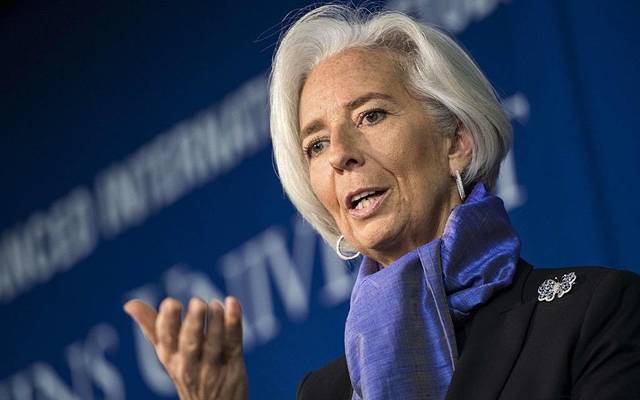
Mubasher: While the global economy has recovered, with an expected global growth of 3.9% in 2018 and 2019, the Arab region did not join the recovery trend, the International Monetary Fund’s managing director Christine Lagarde stated.
Countries around the world face different economic situations, as oil exporters, for instance, faced a serious challenge after the decline in oil prices, while oil importers’ expected growth rates fall short of their aspirations, Lagarde added.
Public debt is rising among oil importers, making up 50% of the gross domestic product (GDP) in many of these countries, while some countries are facing conflicts, terrorism, large inflows of refugees, and grave security risks, the top official revealed.
Furthermore, global unemployment among youth is at its highest rates, with an average of 25%, while more than 27 million young people will join the workplace over the next five years, anxious to be included, she remarked.
“But so far their aspirations are unfulfilled, and their understandable frustration is compounded by perceived unfairness, as surveys find that more than 60% of people believe that connections matter far more than qualifications for getting a job,” Lagarde commented.
Without a sustainable fiscal policy, the rising debt will weigh on young people, and there will be a shortage on the required funds for more inclusive growth, the IMF’s managing director added.
“Many countries have undertaken important reforms on the revenue side, including the recent introduction of a VAT in Saudi Arabia and UAE. This is an important step toward diversifying revenue and building tax capacity,” said Lagarde during the third Arab Fiscal Forum.
Lagarde stressed that public spending was very high in the region, especially in the GCC, while approaches 55% of some countries’ GDP.
Energy subsidies are “extremely costly”, accounting for an average of 4.5% of oil exporters’ GDP and 3% of GDP among oil importers, the former French economic affair minister stated.
Oil subsidies are “vastly inequitable” and serves the rich interest, who are the biggest consumers of energy, she explained.
“The challenges of the Arab region may be great, but so is the potential of its people and the determination of its economic leaders,” Lagarde concluded.



