











Mubasher: Volvo on Thursday said that it teamed up with Chinese internet giant Baidu to develop a driverless taxi in China, in another bid to secure its place in the robotaxi market.
The venture would provide the Chinese-owned Swedish company access to Baidu’s self-driving software Apollo, by which it would develop the so-called Level 4, which is the second highest after level 5, in which vehicles should be capable of navigating roads, without any driver input.
The carmaker did not specify when the Baidu car would be ready.
The deal has no supply agreement, but it is seen as the first step into the Chinese market, which is widely expected to become the single largest market for driverless vehicles in the next decades.
Selling robotaxis to ride-sharing companies would account for “a significant portion” of the vehicles required for the auto giant to attain a target of third of its sales from autonomous cars by 2025, Volvo’s CEO Hakan Samuelsson told Thomson Reuters.
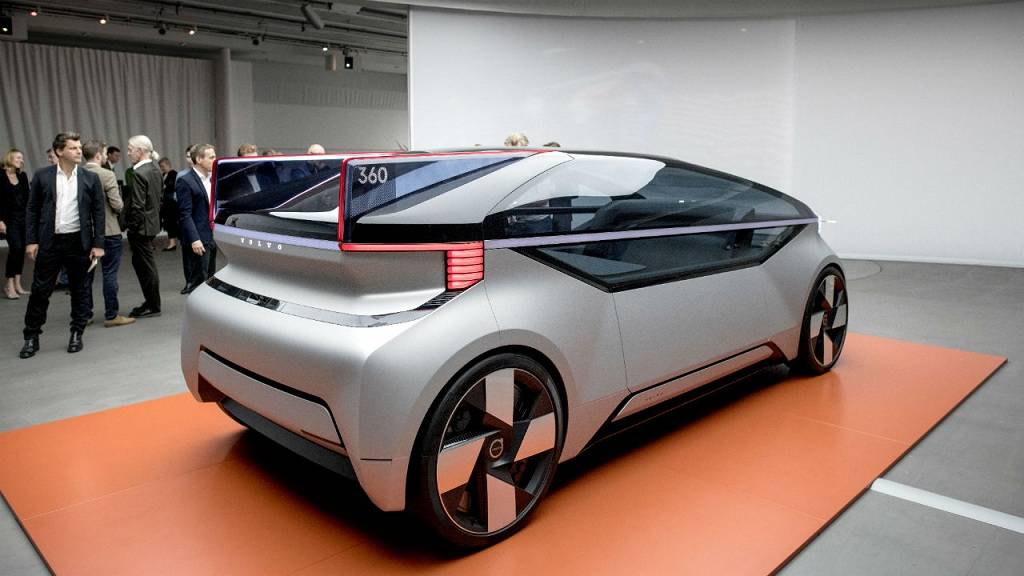
“Robotaxis [are] a segment where we will compete not as operators but by selling cars to companies we’ve sold to previously,” Samuelsson said.
Development costs for autonomous and electric vehicles (EV) are expected to represent around 5% of the turnover, he added.
Moreover, “we need to be humble and say that we need new partnerships to be strong in this segment [and] we definitely cannot do this in our normal development area,” he said.
Samuelsson expected partnerships with battery suppliers as well as producers of parts such as electric motors, inverters and chargers, saying that the company still plans, however, to develop its own electric powertrain.
The deal came at the time when a growing number of automobile makers are partnering with tech companies or rivals to divide the big cost of developing functional and safe autonomous driving systems.
On Wednesday, Ford and Baidu announced a two-year project to test driverless cars on Chinese roads, where the vehicles would be capable of operating autonomously under certain conditions by the time the development and testing process end.



